

On this page
A cohesive outdoor collection should feel related before anyone notices why. The sofa, dining chair, lounger and tables do not need the same frame, but they should appear to have been designed for the same architecture, climate and type of use. That relationship is created by a small number of repeatable decisions: line, proportion, material, color and detail.
For developers and hospitality teams, coherence is more than an aesthetic benefit. A controlled collection reduces finish approvals, simplifies replacement parts and makes phased purchasing easier. The objective is not to create a rigid matching set. It is to build a visual and technical system that can expand without losing its identity.
A collection feels complete when every product follows the same rules—even when no two products share the same silhouette.
1. Write the design grammar first
Begin with a one-page direction that describes the character of the program in observable terms. Instead of “modern luxury,” define low horizontal profiles, softened corners, warm timber accents, restrained upholstery and a clear relationship between solid and open surfaces. These rules give designers and suppliers something useful to test.
The grammar should also state what the collection is not. A project may avoid exposed ornament, highly polished metal or oversized cushions because those elements conflict with the architecture. Clear exclusions prevent the program from drifting when new pieces are added months later.
- Choose two or three dominant line qualities: rectilinear, curved, tapered or woven.
- Define one primary frame family and one controlled accent material.
- Set the intended visual weight: grounded, floating, architectural or soft.
2. Select anchor pieces before supporting pieces
Every program needs one or two anchor products that carry the strongest identity. In a resort this may be a pool lounger and a deep sectional; in a villa collection it may be the principal sofa and dining table. Approve these pieces first because their seat heights, radii, materials and finish tone will set the standard for everything around them.
Supporting products should repeat selected cues without becoming miniature versions of the anchors. A side table can echo a leg angle; a dining chair can repeat the rope color but use a lighter frame; a planter can pick up the profile of a table base. This creates recognition with enough variation to keep the space natural.
3. Coordinate proportion across different uses
Lounge, dining and poolside furniture solve different ergonomic problems, so their dimensions cannot be identical. They can still share a proportional logic. Compare arm thickness, leg setback, cushion-to-frame ratio and the amount of open space below each seat. Small inconsistencies in these relationships are often what make a mixed program feel assembled rather than designed.
Create a simple elevation sheet that places key pieces at the same scale. This exposes abrupt changes in visual weight before prototypes are built. It also helps the team decide where contrast is intentional—for example, a sculptural lounge chair may be allowed more volume while dining chairs remain light for service circulation.
4. Use a material palette, not a material recipe
A strong collection normally has one dominant frame finish, one warm or tactile accent and a controlled family of textiles. The exact combination can shift by product. Teak may appear as a sofa arm, a table top and a small handle rather than becoming the entire structure of every item.
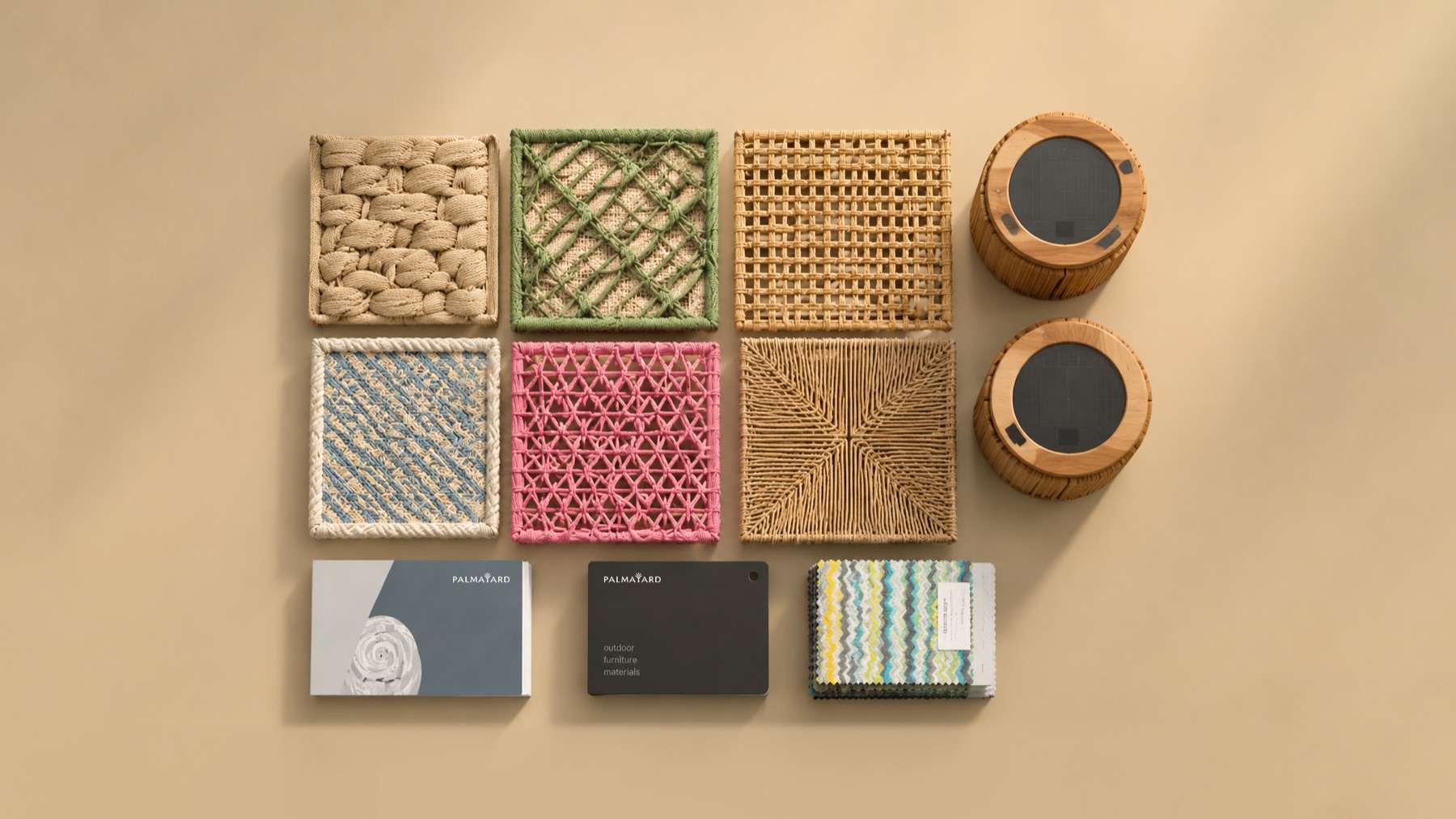
Performance must be part of the palette. Confirm that rope, powder coating, fabric, foam and hardware are appropriate for the actual exposure. Review the materials together under daylight, then record supplier codes, color standards and approved physical samples in the specification. The PalmaYard material library can help connect the intended look to maintenance and weather requirements.
Keep one signed material board and one golden product sample. Digital color references alone are not enough to control a multi-product production run.
5. Document the collection as a repeatable system
Before production, turn the design language into a schedule of measurable decisions: finish codes, cushion construction, hardware, glides, table-edge profiles, labels and packing references. Shared components should have consistent codes. Unique components should be clearly identified so replacements do not depend on visual guesswork.
Finally, test the collection through real room groupings rather than isolated product renders. Build lounge, dining and transition combinations at the quantities the project will use. This reveals whether the range has too many statement pieces, too little variation or gaps in scale. Explore modern outdoor inspiration, then use custom development to translate the direction into drawings, samples and a controlled production specification.
Move from guidance to a project specification
Use the relevant commercial pathway when you are ready to compare products, develop a collection or review a live brief.