


On this page
Coastal outdoor furniture works in one of the most demanding everyday environments for a product assembly. Salt can remain on surfaces after moisture evaporates, ultraviolet exposure stresses coatings and fibers, and sunscreen or pool chemicals create cleaning conditions that are rarely shown in a showroom. A material may perform well by itself and still fail where it joins another material.
The right specification begins with exposure, not with a preferred look. Map distance from the water, direct sun, wind, splash, cleaning frequency, storage and expected service life. Then select the frame, finish, hardware, weave, upholstery and cushion as one coordinated system.
On a coastal project, the weakest connection—not the strongest headline material—usually determines the maintenance burden.
1. Build an exposure map before choosing materials
Not every terrace in a coastal project receives the same exposure. A covered restaurant veranda may face airborne salt and frequent wiping, while a pool-edge lounger also receives standing water, chlorine residue and intense sun. Rooftops add wind movement and greater handling risk. Record these zones so one generic specification is not applied blindly everywhere.
Exposure mapping also improves budgeting. Premium materials can be concentrated where the risk is highest, while protected areas may use a broader range of finishes. The map should travel with the bill of quantities so product decisions remain connected to their installation locations.
2. Treat frames, coatings and hardware as one system
Powder-coated aluminum is widely used because it is light and naturally corrosion resistant, but its performance still depends on alloy, weld preparation, drainage, pretreatment and coating coverage. Water should not remain trapped inside tubes or around concealed joints. Cut edges, drilled holes and contact points deserve the same attention as visible surfaces.
Stainless hardware is not one universal category. Grade, surface finish and contact with dissimilar metals affect performance. Teak can be durable outdoors, but its natural weathering and the possibility of oil transfer must be accepted in the design. Ask the supplier to explain how materials are isolated, drained and replaceable rather than relying on broad labels.
- Confirm pretreatment and coating specification for the actual exposure.
- Check drainage paths at tube ends, welds, feet and concealed cavities.
- Review fastener grade and isolation between dissimilar metals.
- Specify replaceable glides so frames do not sit directly on wet paving.
3. Specify rope and textiles beyond color
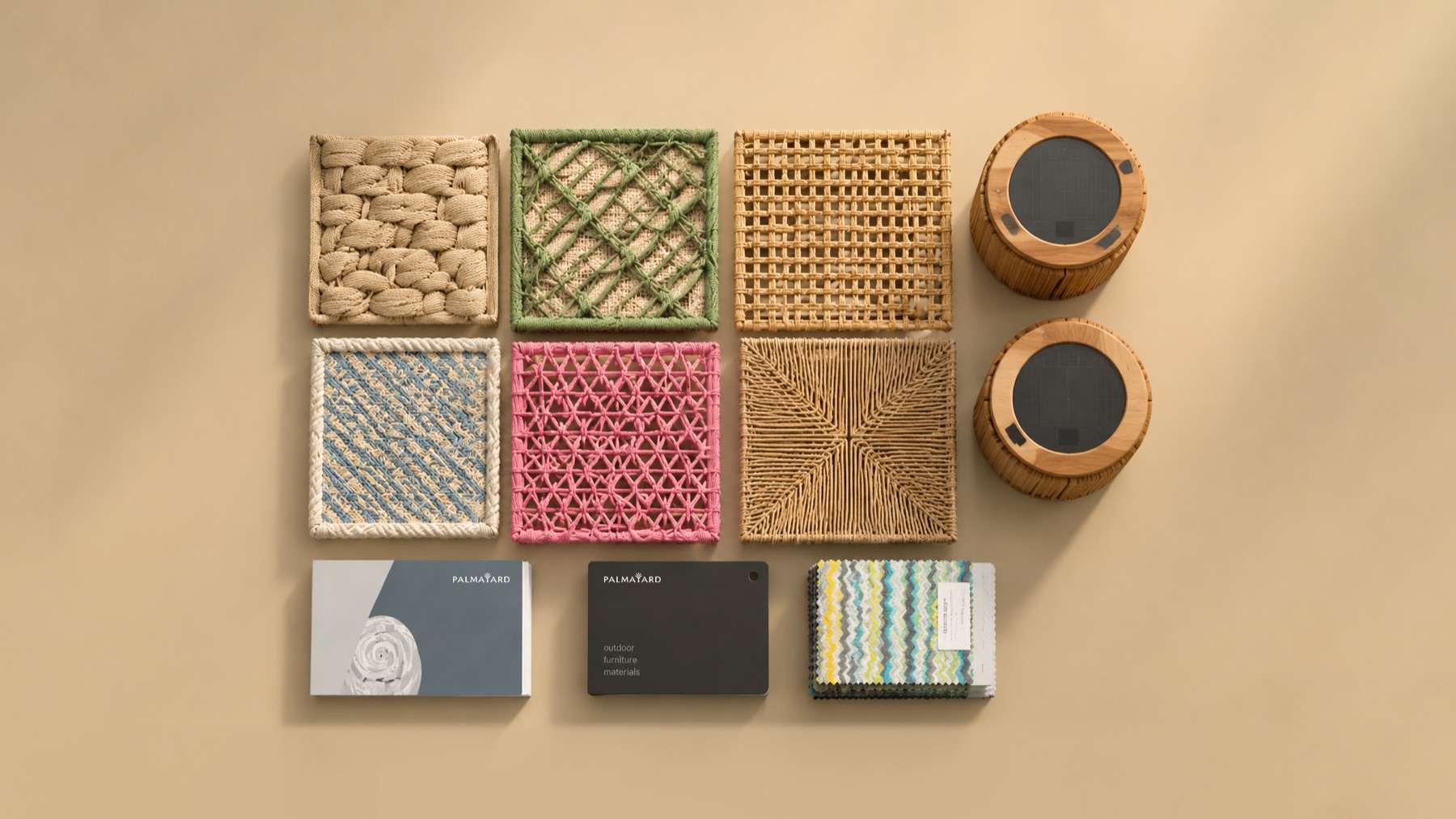
Outdoor rope and fabric should be evaluated for fiber content, pigment method, ultraviolet stability, abrasion, drying and approved cleaning. Solution-dyed constructions can offer useful color durability, but braid structure, tension and contact with the frame still affect long-term appearance. Pale colors may show residue; very dark surfaces can become hotter in direct sun.
Inspect a tensioned sample, not only a loose color swatch. Wet it, allow it to dry and examine the contact points. For upholstery, confirm seam thread, zipper, backing and drainage details. A high-performance face fabric cannot compensate for absorbent interior layers or seams that hold water.
4. Design cushions to release water
Cushion performance depends on how quickly water can leave the entire assembly. Open-cell or quick-drain foam, breathable liners, mesh panels and correctly positioned openings can reduce drying time. The cover should be removable where operationally practical, with clear orientation labels so staff can reinstall it correctly.
Comfort still matters. Very firm drainage foam may not suit a premium lounge experience, while deep soft cushions may require overnight storage or covers in heavy weather. Define the operational routine with the owner before finalizing cushion depth and construction. Product design and maintenance planning should agree rather than contradict each other.
5. Validate the maintenance plan before ordering
Ask what staff will actually use to rinse, wipe and store the furniture. Confirm approved cleaners, prohibited chemicals, cover requirements and inspection intervals. A practical routine may include fresh-water rinsing after salt events, prompt removal of sunscreen residue and periodic checks at hardware and rope contact points.
Keep spare glides, covers, hardware and a small quantity of approved rope or fabric for repair. Record every finish code in the handover package. For a project-specific recommendation, compare systems in the outdoor material library and review the intended application with the hospitality project team. Test requirements should always be confirmed for the specific project and local standards.
No material is maintenance free. Coastal durability improves when exposure, construction, cleaning and replacement planning are specified together.
Move from guidance to a project specification
Use the relevant commercial pathway when you are ready to compare products, develop a collection or review a live brief.